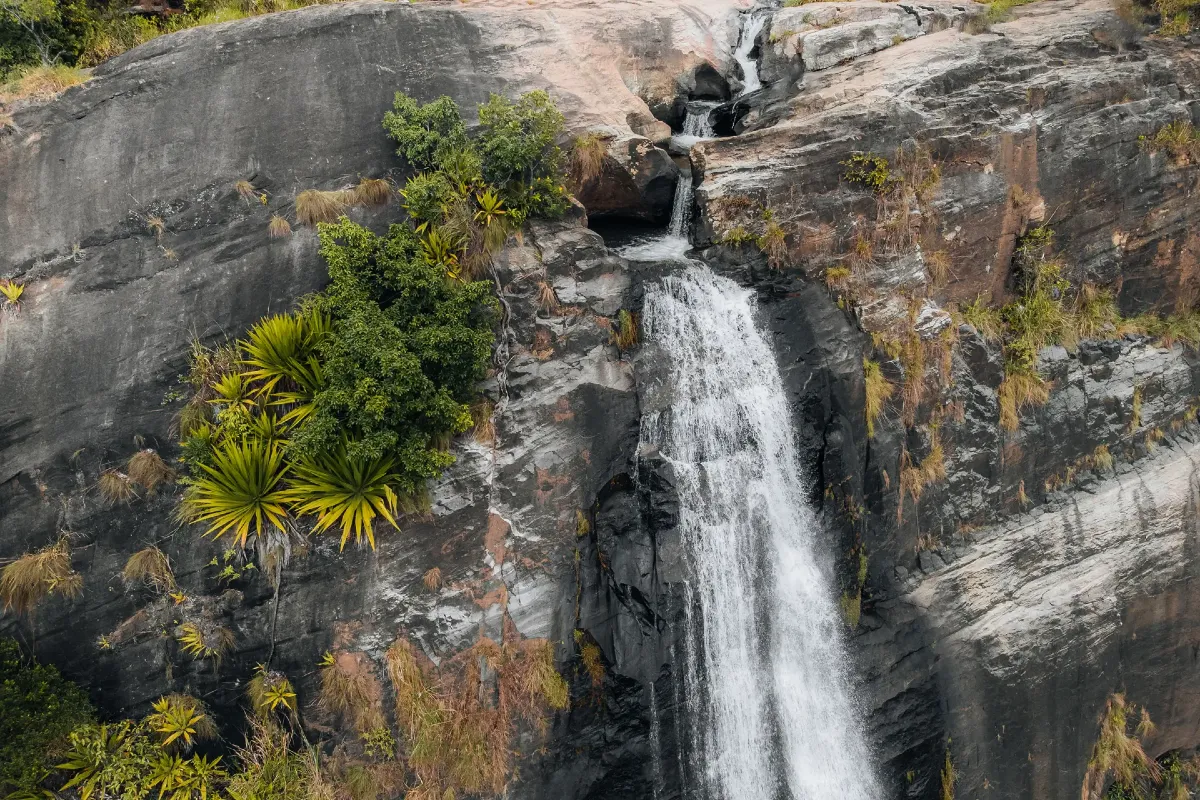
Diyaluma Falls
Uva Province, Koslanda
Sri Lanka's Second-Highest Waterfall Awaits
Diyaluma Falls is a 220-metre cascade that commands respect the moment you lay eyes on it. Formed by the Punagala Oya river spilling over a high escarpment, this waterfall creates a striking vertical curtain of water that descends into a deep valley below. Located in Uva Province's Badulla District, about 6 kilometres east of the village of Koslanda, Diyaluma has earned its reputation as one of Sri Lanka's most dramatic natural attractions—and for good reason.
What to See and Do
The falls present themselves in multiple ways depending on where you view them from. From the roadside viewpoint near the A4 highway, you'll see the full height of the cascade framed against the surrounding landscape. But the real magic happens when you venture higher.
At the upper section, you'll discover a hidden playground of natural pools carved into stone at the cliff's edge. These pools sit at the lip of the escarpment and offer expansive views over the valley—imagine swimming with a panorama stretching across tea plantations and distant plains. When water flow is calm, these pools are perfect for a refreshing dip.
The waterfall itself reveals layers of complexity: a sweeping single drop combined with a series of rock shelves and smaller cascades above the main fall. Early morning light and mist create dramatic photography opportunities, especially after rain when the water flow is strongest.
Two Routes to the Falls
You have two main options for experiencing Diyaluma:
- The Shorter Route (approximately 30 minutes): Starting from Poonagala village, this footpath descends through grassland and patches of forest toward the upper pools and cascades. It's the more manageable option and rewards you with access to those natural swimming pools at the top.
- The Longer Route (more strenuous): Beginning near the small bridge on the A4 highway near Koslanda, this uphill hike takes 20–30 minutes of fairly tough trekking. You'll approach from below and witness the falls from the Diyaluma Falls Bridge, giving you a different perspective of that dramatic 220-metre drop.
Both trails are well-maintained, though neither is formally signposted. The paths involve steep descents, jungle sections, and can be slippery—especially after rain.
History and Significance
Diyaluma Falls holds the distinction of being Sri Lanka's second-highest waterfall. The falls were formed by the Punagala Oya, a tributary that feeds into the Kuda Oya river system, which eventually connects to the Kirindi Oya—a reminder that even this dramatic single cascade is part of a larger river story flowing through the island's central highlands.
The name Diyaluma is often translated as rapid flow of water, though some sources suggest a more poetic meaning: liquid light. Once you're standing at the cliff edge with wind and mist on your skin, you'll understand why.
Practical Visitor Information
Entry Fees and Access
There is no official entrance fee to visit Diyaluma Falls, making it an accessible adventure for all budgets. Local guides are often available along the trails and can be hired for navigation, local knowledge, and assistance locating the best swimming spots and photo vantage points.
Best Time to Visit
Visit early morning or just after rain for the most spectacular water flow and dramatic lighting. However, avoid the monsoon season, when water currents become hazardous and leeches are prevalent in damp vegetation. Always check the weather forecast before heading out, and bring plenty of water and food for your hike.
What to Bring and Wear
Wear comfortable, sturdy hiking shoes and practical clothing suitable for steep terrain. Expect slippery rocks and muddy sections, particularly after rainfall. Bring swimwear if you plan to use the upper pools, a torch or headlamp if hiking in low light, and sun protection for exposed sections.
Getting There from Ella
Diyaluma Falls is approximately 30 kilometres south of Ella, one of Sri Lanka's most popular hill country destinations. From Ella, you can hire a tuk-tuk or taxi for the journey to either Poonagala village (for the shorter route) or the A4 highway bridge near Koslanda (for the longer route). The drive takes roughly one hour from Ella.
The falls sit directly on the Colombo–Badulla highway (A4), so they're accessible whether you're travelling between these two cities or exploring the Uva Province more broadly.
Tips for Visitors
- The hike up the hill isn't always easy to follow, but trails are generally well-maintained with clear paths.
- Local guides can be invaluable for navigation, especially if you're uncertain about the terrain or want to learn more about the surrounding landscape.
- The natural pools at the top are popular for swimming, but only when water flow is calm—never attempt to swim during or immediately after heavy rain.
- Photography enthusiasts should time visits for golden hour (early morning or late afternoon) when light and mist create the most dramatic effects.
- The surrounding landscape features terraced tea plantations and forested ridgelines—take time to appreciate the broader scenery beyond the falls themselves.
- Bring insect repellent and check your body for leeches after hiking through wet vegetation.
Nearby Attractions
Ella, just 30 kilometres north, is a charming hill country town worth exploring. The region also features other notable waterfalls and natural attractions that complement a visit to Diyaluma, making it easy to combine this adventure with other experiences in Sri Lanka's central highlands.
Accessibility
Requires 2 km hike with stairs and jungle path; moderate difficulty, slippery after rain; not wheelchair accessible; suitable for fit visitors, leeches possible in wet conditions
Opening Hours
Open access with no fixed hours; natural site accessible during daylight
Related Attractions


Written by
AdminMar 21, 2026