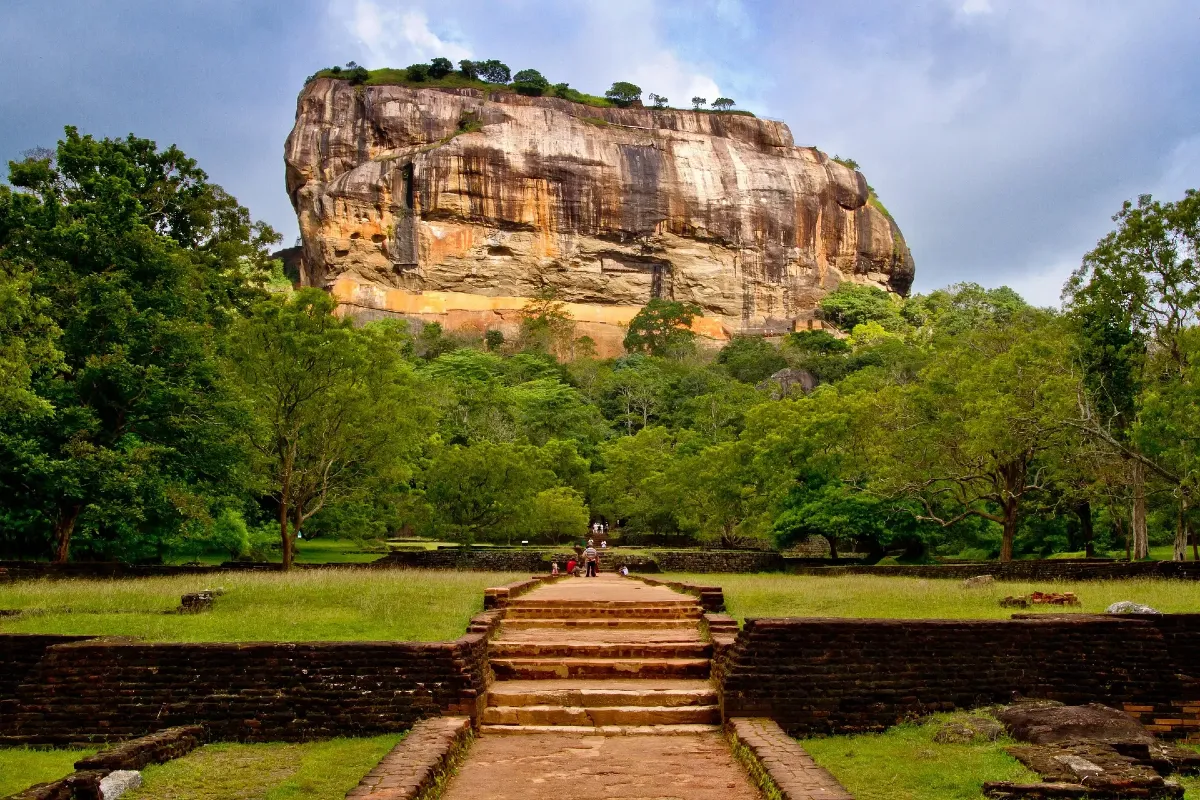
Yapahuwa Rock Fortress
North Western Province, Kurunegala
A Medieval Fortress Capital
Yapahuwa served as the capital of Sri Lanka for a brief but significant period in the late 13th century. King Bhuvanekabahu I chose this imposing granite rock as his seat of power, building a fortress to protect the Sacred Tooth Relic — the most revered religious object in Sinhalese Buddhism. The rock rises dramatically 90 metres above the flat surrounding plains, offering natural defensive advantages.
The Ornamental Stairway
The main attraction is the magnificent stone stairway leading to the upper levels of the fortress. Carved from granite and flanked by intricately decorated balustrades featuring lions, dancers, and musicians, this stairway is considered one of the finest examples of medieval Sinhalese stone carving. The influence of South Indian Dravidian architecture is clearly visible in the carvings, reflecting the cultural connections of the period.
Exploring the Site
Beyond the stairway, visitors can explore rock caves that contain ancient inscriptions and fragments of wall paintings. Some caves were used by Buddhist monks long before the fortress was built. The climb to the summit, while moderately steep, is rewarded with panoramic views over the surrounding plains stretching to the distant hills. A small archaeological museum near the entrance displays artifacts found at the site.
Getting There
Yapahuwa is located approximately 4 kilometres from the Maho junction on the Colombo-Anuradhapura road, about 180 kilometres north of Colombo. Maho is a major railway junction, and trains from Colombo stop here regularly. From Maho, a tuk-tuk to Yapahuwa takes about 15 minutes. The site is much less crowded than Sigiriya, offering a quieter alternative with its own unique historical importance.