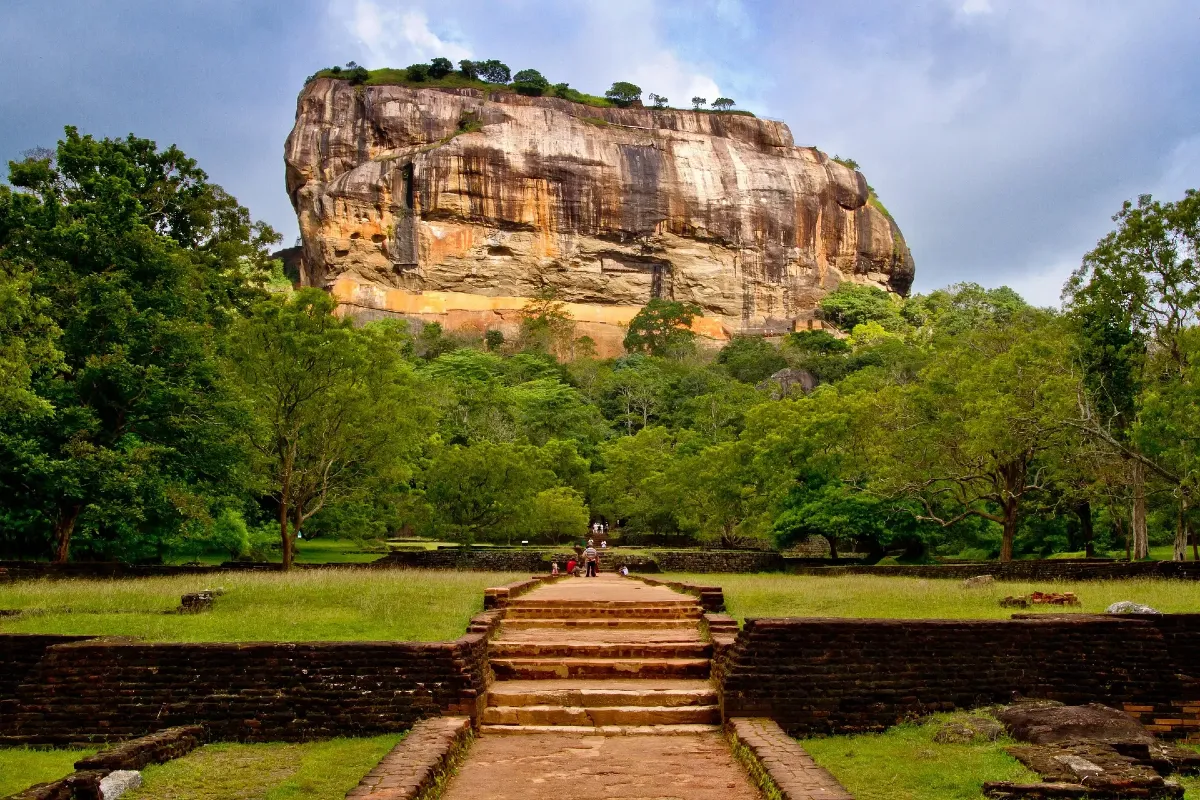
Tomb of Vijaya
North Western Province, Panduwasnuwara
Perched on the Medagama Kanda hillock, the Tomb of Vijaya whispers tales of Sri Lanka's ancient beginnings. This stupa-shaped circular structure, traditionally linked to the island's first recorded king, draws you into a serene world where forest paths lead to 2,500-year-old mysteries.
What to See & Do
At the heart of your visit is the **stupa-shaped circular structure**, crafted from distinctive curvilinear kot-karalla bricks inscribed with 10th-century Sinhala script. These inscriptions offer a glimpse into early linguistic development and construction techniques. Inside, ashes radiocarbon-dated to around 2,500 years ago align with King Vijaya's traditional reign, making it a poignant example of early Sri Lankan burial architecture.
Expect a rewarding hike through lush forest paths to reach the hilltop. The climb takes about an hour, immersing you in the tranquil surroundings of historic temples like Nikasala Aranya Senasanaya and Kande Medagama Raja Maha Vihara. Once there, take time to circle the monument, pondering its layers of history amid the peaceful, forested setting.
History & Significance
The Tomb of Vijaya is traditionally believed to be the burial place of King Vijaya, who reigned from 543–505 BCE according to ancient chronicles. Located 6 km southeast of the ancient kingdom of Panduwasnuwara, the site was discovered in ruins by the Sri Lankan Department of Archaeology. Excavations uncovered the ashes, dated to approximately 2,500 years ago.
In 1986, the Department conserved the 10th-century brick structure, preserving its Sinhala inscriptions. It was formally protected as an archaeological site by the Sri Lankan Government in 2007, recognising its cultural importance in Panduwasnuwara DS division, Kurunegala District.
Practical Visitor Information
No verified opening hours or entry fees are available for the Tomb of Vijaya. You'll need moderate fitness for the roughly 1-hour forest hike to the summit. The site offers a serene, forested atmosphere, best enjoyed in comfortable weather—dry seasons are ideal to avoid slippery paths.
Best Time to Visit
Visit during cooler months for easier climbing, though the site's remote nature means it's peaceful year-round. Early mornings provide cooler temperatures and stunning light over the hillock.
Getting There
Start your journey from the Kande Medagama Raja Maha Vihara temple or near Nikasala Aranya Senasanaya. Follow forest paths up Medagama Kanda hillock—these trails lead directly to the monument. The site is in Panduwasnuwara DS division, about 6 km southeast of ancient Panduwasnuwara. From Kurunegala, head towards Panduwasnuwara; local transport or a tuk-tuk can drop you near the trailheads. GPS coordinates (7.57425, 80.12736) help for navigation.
Tips for Visitors
- Wear sturdy shoes and bring water—the hike involves uneven forest terrain.
- Pack insect repellent and light layers for the tropical climate.
- Go with a local guide if possible for insights into the inscriptions and legends.
- Respect the protected status: don't touch bricks or remove anything.
- Combine with nearby temples for a full day of exploration; start early to beat the heat.
- Moderate fitness is key—it's not wheelchair accessible due to the climb.
Nearby Attractions
- Panduwasnuwara Raja Maha Vihara (3.3 km): Explore this ancient temple complex tied to the kingdom's history.
- Panduwasnuwara Museum (4.5 km): Delve deeper into regional artefacts and exhibits.
- Nikasala Aranya Senasanaya: A historic forest monastery surrounding the hillock.
- Kande Medagama Raja Maha Vihara: Your trailhead temple with spiritual vibes.
Accessibility
Requires climbing forest paths and hill for about 1 hour; not wheelchair accessible, moderate physical difficulty
Opening Hours
Unknown; site accessed via paths from nearby temple, likely open daylight hours