Vehicle Registration Renewal Process in Sri Lanka 2026
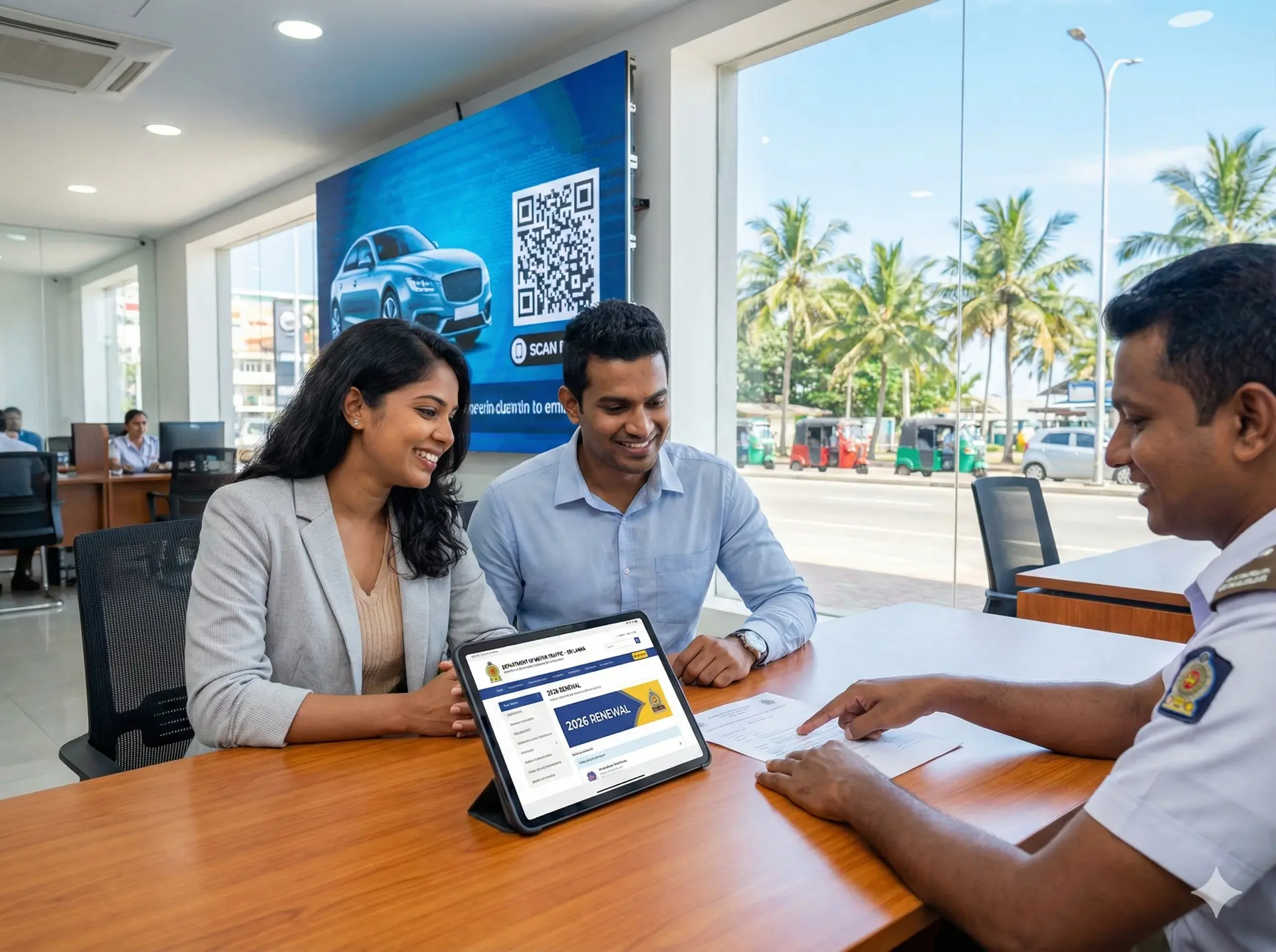
Step-by-step guide to renewing your vehicle registration in Sri Lanka for 2026, including online renewal process, documents needed, and penalties.
The Lankawebsites editorial team curates, fact-checks, and updates guides on personal finance, property, health, immigration, legal, business, and lifestyle topics relevant to Lankawebsites readers. Articles are produced with AI assistance and reviewed by the editorial team before publication.
As your vehicle's revenue licence expiry date approaches, renewing on time isn't just about compliance—it's about avoiding hefty penalties and ensuring you can legally drive on Sri Lanka's roads. The good news is that the process has become significantly more convenient in 2026, with online renewal options allowing you to complete the entire process from home. Whether you're renewing for the first time or doing your annual renewal, understanding the requirements, documents, and timelines will help you avoid common pitfalls and unnecessary expenses.
Current Vehicle Revenue Licence Renewal Costs in Sri Lanka (2026)
The annual revenue licence fee depends on your vehicle category, fuel type, and unladen weight. The fee structure currently in force is set by the Motor Traffic Fees Regulations gazetted in November 2022, and these rates remain the baseline applied across all provincial Divisional Secretariats and the online eRL system. Petrol motor cars between 500kg and 762kg are charged Rs. 2,500 annually, while the equivalent diesel vehicle pays Rs. 3,900. Motorcycles are charged Rs. 900 annually, and motor tricycles and motor tricycle vans (including three wheelers) are charged Rs. 550.

Here's a quick reference for the most common vehicle categories:
| Vehicle CategoryUnladen WeightPetrol (Rs.)Diesel (Rs.) | |||
|---|---|---|---|
| Motor Car | 500kg – 762kg | 2,500 | 3,900 |
| Motor Car | 762kg – 1,016kg | 3,000 | 5,000 |
| Motor Car | 1,016kg – 1,270kg | 4,000 | 7,500 |
| Dual Purpose Vehicle | Less than 1,000kg | 2,500 | 4,500 |
| Motor Cycle | All | 900 | — |
| Three Wheeler / Motor Tricycle Van | All | 550 | 550 |
Electric, hybrid, and alternative fuel vehicles:
Vehicles propelled by electricity, solar energy, LPG, or alternative fuel pay 50% of the equivalent petrol vehicle fee for the same class and weight. Bi-fuel vehicles (petrol combined with another energy source) are charged the same as the petrol equivalent.
Scribd
Land vehicles, lorries, buses, and special purpose vehicles
follow separate weight-based schedules, and rates climb significantly for heavier gross vehicle weights — a motor lorry exceeding 4,000kg, for example, attracts considerably higher annual fees. For these categories, the eRL portal will calculate the exact amount once you enter your vehicle details.
Late Renewal Penalties
Renewing on time matters because the surcharge structure is steep. An additional 10% of the tax fee applies if you renew within 3 months of the expiry date. Between 3 and 12 months late, the penalty rises to 20%, and beyond 12 months it becomes 30% of the annual fee — on top of the standard licence fee itself.
Np
Renewing Online
You can complete the entire renewal from home through the official eRevenue Licence portal at web.erl2.gov.lk (the older URL gov.lk/services/erl also redirects to the current system). Sign in with a Google account, enter your province, vehicle number, last year's licence number, and chassis number, then select your emission certificate issuer and insurance company for verification. Once payment is made by credit or debit card, a temporary printable licence valid for 14 days is emailed immediately, and the printed licence is delivered by registered post to the registered address within about 7 days.
Ds
Before starting, make sure your insurance certificate and emission test certificate (and fitness certificate, if your vehicle requires one) are current and have been uploaded by the issuing organisation to the central system — the portal validates these electronically and will block the renewal if either is missing or expired.
Note: Fees listed are approximate and based on the current published gazette schedule. The DMT and Provincial Councils have revised these rates several times in recent years, so always confirm the figure shown by the eRL portal at the time of payment.
Understanding Sri Lanka's Vehicle Registration System
In Sri Lanka, vehicle registration involves two distinct components that owners must maintain. The initial registration with the Department of Motor Traffic (DMT) establishes your vehicle's legal identity and ownership, providing you with a Certificate of Registration . This is a one-time process completed when you first acquire the vehicle. The revenue licence, however, requires annual renewal and serves as proof that you've paid the required road tax for the current year .
Your vehicle's licence year starts from the day and month of first registration, not the calendar year . This means if your vehicle was first registered on 15th March, your annual licence expires every 15th March. You can pay your revenue licence up to two months before the expiry date without penalties . Understanding this distinction is crucial because many vehicle owners confuse these two components, leading to unnecessary confusion during renewal time.
Required Documents for Revenue Licence Renewal
Before starting your renewal process, ensure you have all necessary documents prepared. You'll need your vehicle's Certificate of Registration (C.R.) or the extract containing particulars of the vehicle issued by the Commissioner of Motor Traffic (CMT-52 or MTA-11), or a certified photocopy of the C.R. approved by your finance organisation if the vehicle is under a lease . Your previous year's revenue licence is also required as proof of past compliance .
A valid vehicle insurance policy certificate is mandatory—the insurance must be current and cover at least third-party liability . For most vehicles, you'll also need a valid emission test certificate issued by an approved testing centre such as Clean Co Lanka or LAUGFS Eco Sri . Commercial vehicles including motor lorries, private coaches, omnibuses, ambulances, hearses, motor tricycle vans, and special-purpose vehicles require current fitness certificates . Omnibuses additionally need passenger service permits .
Online Revenue Licence Renewal Process
Prerequisites for Online Renewal
Before attempting online renewal, ensure your insurance and emission certificate are up to date . The online system validates these documents electronically, so they must be current in the respective providers' systems. You cannot proceed with online renewal if either validation fails. Note that online renewal is only available for existing vehicles that have previously obtained a revenue licence through a provincial office—first-time licences for newly registered vehicles must be obtained in person .
Step-by-Step Online Renewal
Access the Electronic Revenue Licence System through the official government portal at www.gov.lk/services/erl . The eRL 2.0 system, which commenced in March 2020, allows vehicle owners to obtain their revenue licences from any province, regardless of where the vehicle was originally registered . Log in using your Google account credentials—if you don't have an account, you'll need to create one first.
Select the "Renew License" option and accurately fill in all required information including your vehicle registration number, chassis number, and personal details . The system will prompt you to validate your emission certificate and insurance policy. Select your insurance provider and emission testing centre from the dropdown menus, then click validate for each. Both validations must turn green before you can proceed to payment .
Once validations are successful, proceed to the payment section. The system accepts major credit and debit cards for online payment. After successful payment, you'll receive an email containing a temporary revenue licence that's valid until your printed licence arrives . The official printed licence will be delivered to your registered address within two weeks . Keep the temporary licence in your vehicle as proof of renewal during this period.
In-Person Renewal at Provincial Offices
If you prefer in-person renewal or need to obtain a first-time licence for a newly registered vehicle, visit your relevant Divisional Secretariat or the head office of the Department of Motor Traffic for your province . For the Western Province, the head office is located at Maligawatta, Colombo. Bring all required documents as listed above, including originals and any certified copies if your vehicle is financed.
Submit your documents at the designated counter where officials will verify all certificates and documentation. Pay the required fee for your vehicle category—fees vary based on vehicle type, engine capacity, and age. For motor cars up to 1000cc, registration fees start from Rs. 10,000 . Upon successful processing, you'll receive your renewed revenue licence immediately or within a few days, depending on the office's workload.
Penalty Structure for Late Renewal
Understanding the penalty structure is crucial for avoiding unnecessary expenses. If you renew within three months of your licence expiry date, you'll pay an additional 10% of the annual tax fee . For renewals between three months and twelve months after expiry, the penalty increases to 20% of the prescribed annual fee . If you allow more than twelve months to pass after your licence expires, you'll face a penalty of 30% of the annual fee .
For newly registered vehicles, the first licence must be obtained within seven days of registration. Failure to do so results in a 10% penalty on the prescribed annual fee . These penalties accumulate quickly, so setting reminders for renewal dates is financially prudent. Additionally, driving without a valid revenue licence is illegal and can result in fines and legal complications if stopped by traffic police.
Special Considerations for Different Vehicle Types
Commercial Vehicles
Commercial vehicles face additional requirements beyond standard passenger vehicles. Motor lorries, private coaches, omnibuses, ambulances, and motor tricycle vans must maintain current fitness certificates issued by approved testing centres . These certificates verify that the vehicle meets safety and operational standards for commercial use. Omnibuses additionally require valid passenger service permits that authorise them to operate passenger transport services .
Agricultural and Special Purpose Vehicles
Tractors and agricultural land vehicles follow similar renewal procedures but have different fee structures. Four-wheel tractors have registration charges starting at Rs. 8,000 for new vehicles . Special-purpose vehicles, which include modified or specialised vehicles, require specific documentation verifying their classification and intended use .
Vehicles Used by Persons with Disabilities
Vehicles registered for use by persons with disabilities qualify for reduced registration and licence fees. The registration charge for these vehicles is Rs. 2,000, significantly lower than standard passenger vehicles . Ensure you maintain all supporting documentation that establishes eligibility for this category.
Common Issues and Troubleshooting
Several common problems can delay your renewal process. If your insurance or emission validation fails during online renewal, contact your insurance provider or emission testing centre to ensure they've updated their systems with your current certificates. Sometimes there's a lag between receiving your certificate and the information appearing in the validation database—waiting 24-48 hours usually resolves this issue .
If you've lost your previous year's revenue licence, you'll need to obtain a duplicate from the Department of Motor Traffic before renewing. Bring your Certificate of Registration and a written request explaining the loss. For vehicles under finance agreements, ensure your finance company provides properly certified copies of your C.R., as original certificates are typically held by the lender until the loan is fully paid.
Modernisation of the eRL System
The Electronic Revenue Licence System 2.0, which began development in March 2020, represents a significant upgrade from the previous system that had been operating since 2009 . The modernised platform aims to enhance online services and improve the overall user experience, allowing vehicle owners to obtain revenue licences from any province regardless of where the vehicle was originally registered . The system prioritises user-friendly interfaces and operational workflows that enhance efficiency, effectiveness, and traceability .
This cross-provincial functionality is particularly beneficial for vehicle owners who've relocated or those who travel frequently. You're no longer restricted to renewing at the original registration province, making the process significantly more convenient for Sri Lanka's mobile population.
Next Steps
Mark your vehicle's renewal date on your calendar and set reminders for two months before expiry to take advantage of the early renewal window without penalties. Ensure your vehicle insurance and emission certificate are renewed before they expire—many owners schedule these renewals together to streamline the process. If you haven't used the online renewal system before, familiarise yourself with the portal well before your deadline so you can address any technical issues without time pressure. For first-time licence renewals or if you encounter difficulties with online validation, allow extra time to visit your provincial office in person. Keep digital and physical copies of all your vehicle documents, including your temporary licence if you've renewed online, as these may be required during traffic checks. By staying organised and renewing promptly, you'll maintain legal compliance whilst avoiding unnecessary penalties and stress.
Frequently Asked Questions
Sources & References
-
1
Department of Motor Traffic - Official Website — dmt.gov.lk
-
2
Online Vehicle Revenue Licence Service — www.gov.lk
- 3
-
4
Vehicle Revenue License Process Discussion - Reddit Sri Lanka — www.reddit.com
-
5
Electronic Revenue Licence System (eRL) - ICTA — www.icta.lk
-
6
Revenue License Information - Department of Motor Traffic WP — motortraffic.wp.gov.lk
-
7
Charges for First Registration - Vehicle - DMT — dmt.gov.lk
Related Articles
Best Engine Oils for Sri Lankan Roads in 2026: Comparisons and Recommendations
Driving on Sri Lanka's roads means battling heat, humidity, dust from the dry zones, and heavy traffic in Colombo. With temperatures often soaring above 30°C and our tropical climate accelerating engi
Preparing Your Car for Sri Lanka's 2026 Southwest Monsoon
Protect your vehicle from monsoon damage with this comprehensive preparation guide for Sri Lanka's 2026 southwest monsoon season.
Top Mechanics in Colombo for 2026 Car Servicing
Discover Colombo's most trusted mechanics for 2026, from DIMO and Sterling to independent workshops. Get expert tips on choosing reliable car service.
Hybrid vs Petrol Cars: Best Choice for Sri Lanka 2026
Comparing hybrid vs petrol cars in Sri Lanka for 2026. Discover real fuel costs, maintenance expenses, and which option suits your driving needs best.