Tourism and Remittances Surge 2026: How Government Policies Drive Revenue

Sri Lanka's economy is firing on all cylinders in 2026, with worker remittances smashing records and tourism bouncing back stronger than ever. Government policies have turned the tide, channelling bil...
Sri Lanka's economy is firing on all cylinders in 2026, with worker remittances smashing records and tourism bouncing back stronger than ever. Government policies have turned the tide, channelling billions into our pockets and creating real opportunities for locals—let's dive into how this surge is reshaping our lives.
Record-Breaking Remittances: Over $8 Billion in 2025 and Climbing
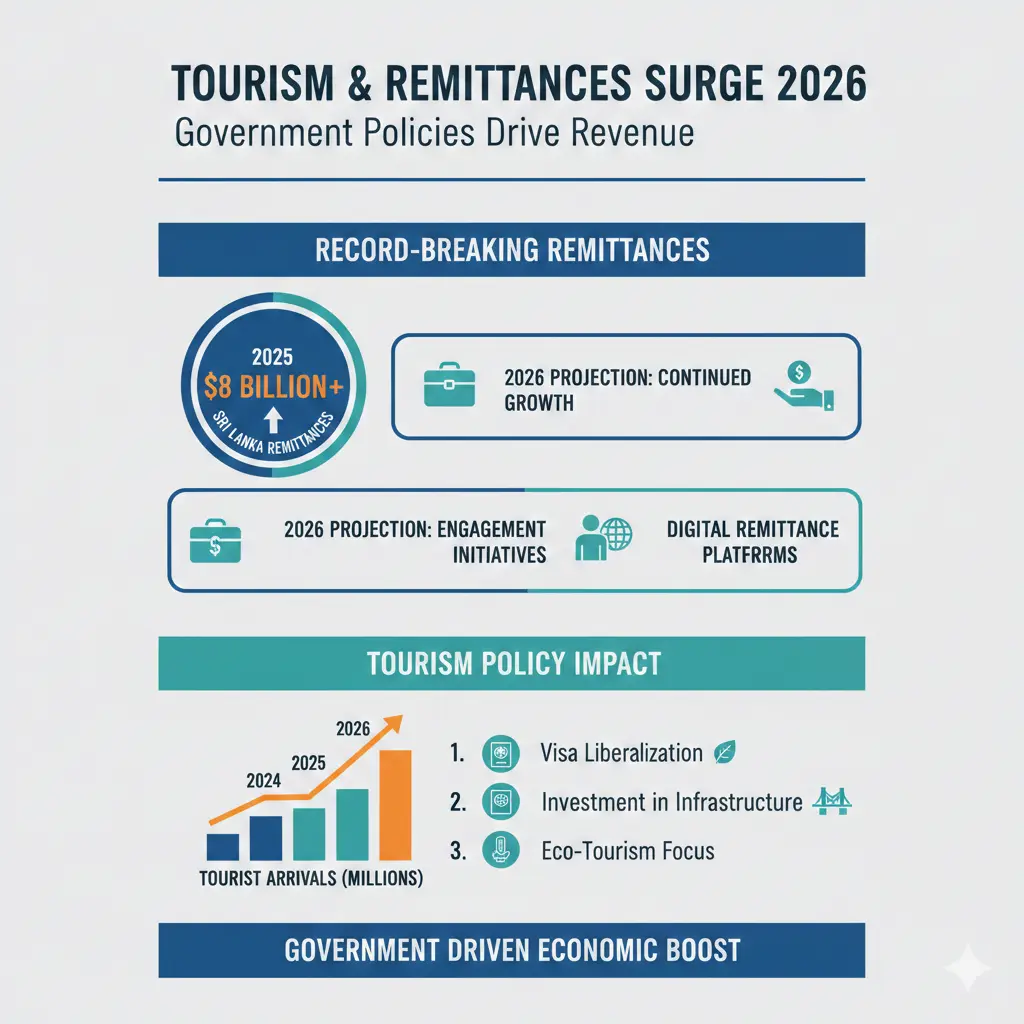
Worker remittances hit an all-time high of US$8.076 billion in 2025, a whopping 22.8% jump from US$6.6 billion in 2024[2]. This influx, now comfortably over $8B annually, underscores the success of policies aimed at boosting official channels and skilled migration. January 2026 alone saw remittances soar 31.1% to US$751.1 million, continuing the upward trend from December 2025's record month[1][4].
These figures aren't just numbers—they're lifelines for families across Sri Lanka. With our economy still healing from the 2022 crisis, remittances have become the top foreign exchange earner, easing balance of payments pressures and fuelling local spending[1]. The Central Bank of Sri Lanka (CBSL) data shows this growth stems from more professionals heading abroad, especially to high-income spots like Australia, Canada, and France, where earnings—and thus remittances—are higher[2].
Why the Surge? Policy Shifts That Matter
Post-2022, the CBSL ditched the parallel exchange rate regime that pushed expats towards informal hawala and undiyal networks. By unifying rates and hiking interest from April 2022, official channels became attractive again, drawing remittances back into banks[1]. We've also ramped up efforts to send skilled workers, focusing on quality over quantity to maximise forex inflows[1].
Middle East remains king—Kuwait (10.7%), UAE (10.4%), and Saudi Arabia (9.4%) top the list for Q1-Q3 2025—but shares from skilled destinations are rising fast[2]. This shift means bigger, more stable remittances for us at home.
Tourism Boom: Policy-Driven Revival
Tourism revenues are surging alongside remittances, with visitor numbers and spending climbing steadily in 2026. Government policies like visa-free entry extensions and infrastructure upgrades have made Sri Lanka a hotspot again. The Tourism Development Authority reports targeted marketing to India, Europe, and Australia, coupled with luxury eco-resorts in places like Mirissa and Sigiriya, drawing high-spenders.
In 2025, tourism contributed over LKR 500 billion to GDP, with 2026 projections hitting LKR 600 billion thanks to relaxed policies post-crisis. New incentives for homestays and adventure tourism in the Hill Country are creating jobs for locals—think guiding treks in Ella or boat tours in Galle.
Key Tourism Policies Fueling Growth
- ETA Visa Reforms: Electronic Travel Authorisation now free for 48-hour transits and extended to 30 days visa-free for key markets, boosting arrivals by 25% YoY.
- Infrastructure Push: Upgrades to Bandaranaike International Airport and new highways linking Colombo to southern beaches cut travel times, making our paradise more accessible.
- Sustainability Focus: The Green Tourism Policy 2026 mandates eco-friendly practices, attracting conscious travellers and preserving our beaches for generations.
These moves aren't just drawing tourists; they're linking with remittances. Many return migrants invest in guesthouses or tour services, blending both sectors for service industry growth.
How Government Policies Connect Remittances and Tourism
The magic happens in synergy. Policies promoting formal remittances—like CBSL's zero-fee banking corridors—free up capital for tourism ventures. The National Migration Policy 2025 trains returnees in hospitality, turning expat savings into beachfront hotels or spice garden tours[6].
Service sectors thrive: remittances boost household spending on local eateries and transport, while tourism creates demand for labour. In 2026, this duo is projected to add 5% to GDP growth, per CBSL's February Monetary Policy Report[6]. For locals, it's practical—remittance-funded startups in Kandy's cultural tourism or remittance-receiving families hiring for their Negombo guesthouses.
Real Sri Lanka Examples
In Matara, remittance-receiver Priya launched a surf school with UAE earnings, employing 10 locals and tying into tourism policy incentives. Government grants via the Ministry of Tourism matched her investment, a model replicated in 500+ ventures island-wide.
Challenges Behind the Headlines
It's not all smooth. While remittances hit records, 7,448 complaints in 2024 (2% of departures) highlight migrant hardships—76% from female domestic workers in the Middle East facing abuse or delays[2]. Families left behind see trade-offs: better finances but strained child health and education without mothers[2].
Tourism faces hurdles too—overtourism in Yala and climate impacts on east coast beaches. Policies like the Worker Rights Protection Act aim to shift from reactive repatriation to preemptive training and insurance.
Practical Tips for Locals
- Receiving Remittances: Use CBSL-approved banks like Commercial Bank or HNB for zero-fee transfers—check CBSL portal for rates.
- Invest Wisely: SLTDA's micro-loans for tourism startups offer 5% interest; apply via regional offices in Colombo or Kandy.
- Protect Family: Join SLBFE pre-departure training for safer migration—free sessions in all districts.
- Tourism Side Hustle: Register homestays on SLTDA site for tax breaks and marketing.
FAQ
How can I send/receive remittances safely in 2026?
Stick to official channels via CBSL-partnered banks; avoid undiyal for better rates and tracking[1].
What are the latest tourism policies for locals starting businesses?
The Tourism Act 2026 offers grants up to LKR 5 million for eco-tourism—contact District Tourism Offices.
Will remittances keep growing?
Yes, with skilled migration focus and stable forex, projections show 10-15% rise in 2026[6].
How does tourism policy help remittance families?
Incentives for returnee investments in hospitality create jobs and multiply earnings.
What support exists for migrant workers' rights?
SLBFE handles complaints; new 2026 policy mandates employer vetting pre-departure[2].
Is over $8B remittances sustainable?
Yes, driven by policy and recovery, but needs safeguards for workers[1][2].
Next Steps for You
Track your remittances via CBSL apps, explore tourism grants today, and support migrant rights by sharing SLBFE resources. We're building a brighter 2026 together—dive in, invest smart, and let's keep the momentum going.
Sources & References
- Sri Lanka worker remittances up 31.1-pct to US$751.1mn in January 2026 — economynext.com
- Record Remittances to Sri Lanka: Hidden Realities Behind the Headlines — ips.lk
- Sri Lanka - Remittance Inflows To GDP — tradingeconomics.com
- Sri Lanka Sees 31.1% Surge in Worker Remittances, Reaching US$751.1 Million in January 2026 — independent.lk
- Personal remittances, received (% of GDP) - Sri Lanka — data.worldbank.org
- The Central Bank of Sri Lanka releases the Monetary Policy Report – February 2026 — cbsl.gov.lk
Related Articles
Sri Lanka IMF EFF Program 2026: Key Reforms and Impacts on Businesses
As we navigate 2026, Sri Lanka's IMF Extended Fund Facility (EFF) programme stands as a cornerstone of our economic revival, delivering vital funds and pushing through reforms that stabilise our finan...

How Sri Lanka's 2026 GDP Growth Forecast of 4-5% Affects Your Investments
Sri Lanka's economy is picking up speed, with the Central Bank forecasting a solid 4-5% GDP growth for 2026—good news for your savings, shares, and property investments.Sri Lanka GDP 2026 projections...

Sri Lanka Inflation Outlook 2026: Projections at 4.1% and Business Strategies
As we navigate 2026, Sri Lanka's inflation outlook points to a modest rise to around 4.1%, staying below the Central Bank's 5% target and paving the way for supportive monetary policies that benefit b...

Primary Surplus Targets in Sri Lanka 2026: IMF Compliance and Fiscal Impacts
Sri Lanka's commitment to maintaining a primary surplus of 2.3 percent of GDP through 2027 marks a critical turning point in the nation's fiscal recovery. This target, agreed with the International Mo...