How to Do Your Own Taxes 2026

Are you ready to take control of your finances and tackle your taxes like a pro? I think it's great that you're considering doing your own taxes this year. Not only can it save you money on preparation fees, but it also gives you a better understanding of your financial situation. You'll be able to...
Are you ready to take control of your finances and tackle your taxes like a pro? I think it's great that you're considering doing your own taxes this year. Not only can it save you money on preparation fees, but it also gives you a better understanding of your financial situation. You'll be able to identify areas where you can improve and make informed decisions about your money. In this article, I'll walk you through the process of doing your own taxes, providing you with the knowledge and confidence you need to succeed. You'll learn about the latest tax law changes, how to gather the necessary documents, and how to choose the right tax filing status.
By the end of this article, you'll be equipped with the skills and knowledge to file your taxes accurately and efficiently. You'll be able to avoid common mistakes and take advantage of the tax credits and deductions you're eligible for. So, let's get started and explore the world of tax filing. I think you'll be surprised at how straightforward it can be once you understand the basics.
Introduction to Tax Filing 2026
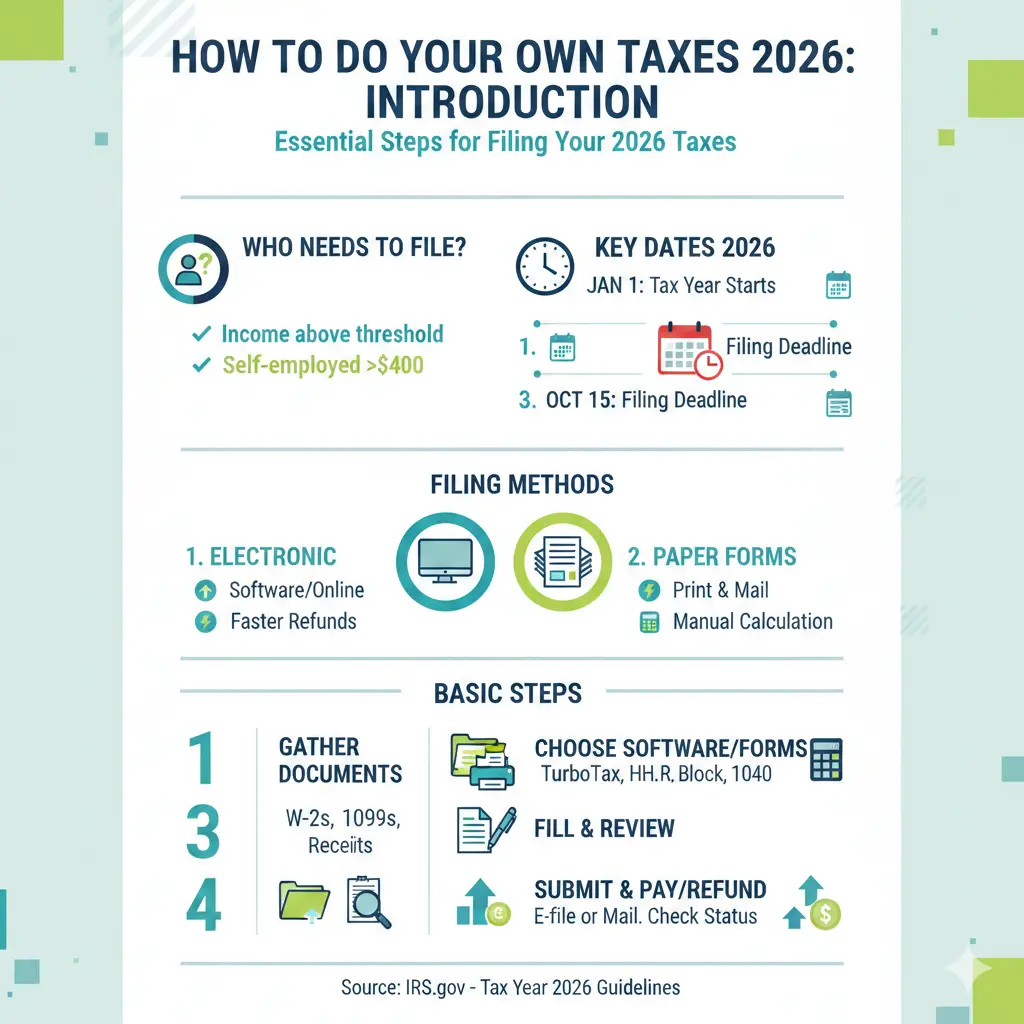
The tax filing process can seem daunting, but it's actually quite straightforward once you understand the basics. I think it's essential to stay up-to-date with the latest tax law changes, as they can affect your filing status and the credits and deductions you're eligible for. For the 2026 tax year, there are several changes you should be aware of, including the increased standard deduction and the expanded child tax credit. You should also be aware of the filing deadlines, which are typically April 15th for individual tax returns.
To ensure you're prepared, you'll need to gather all the necessary documents, including your W-2 forms, 1099 forms, and receipts for deductions. I think it's a good idea to create a checklist to help you stay organized and ensure you don't miss anything. You should also be aware of the different filing statuses, including single, married filing jointly, and head of household. Each status has its own set of rules and regulations, so it's essential to choose the one that's right for you.
For example, if you're married, you may be eligible to file jointly, which can provide several benefits, including a higher standard deduction and more favorable tax rates. However, if you're separated or divorced, you may need to file as single or head of household, depending on your individual circumstances. I think it's always a good idea to consult with a tax professional if you're unsure about your filing status or any other aspect of the tax filing process.
Gathering Necessary Tax Documents
Gathering all the necessary tax documents is a critical step in the tax filing process. I think it's essential to start early and create a system to help you stay organized. You'll need to collect your W-2 forms from your employer, which will show your income and the taxes withheld. You'll also need to gather any 1099 forms, which will show income from freelance work or other sources.
In addition to your income documents, you'll also need to gather receipts for deductions, such as charitable donations, medical expenses, and mortgage interest. I think it's a good idea to create a folder or file to keep all your documents in one place. You should also be aware of the different types of deductions you're eligible for, such as the earned income tax credit and the child tax credit.
For example, if you have children, you may be eligible for the child tax credit, which can provide a significant reduction in your tax liability. You'll need to gather documents to support your claim, such as birth certificates and social security numbers. I think it's always a good idea to consult with a tax professional if you're unsure about what documents you need or how to claim a particular credit or deduction.
You should also be aware of the deadline for receiving your tax documents, which is typically January 31st for W-2 and 1099 forms. I think it's a good idea to follow up with your employer or clients if you haven't received your documents by this date. You can also use online tools and resources to help you gather and organize your documents, such as tax software or spreadsheet templates.
Understanding Tax Credits and Deductions
Tax credits and deductions can provide a significant reduction in your tax liability, but they can be complex and difficult to understand. I think it's essential to take the time to learn about the different types of credits and deductions you're eligible for. For example, the earned income tax credit is a refundable credit that's designed to help low-to-moderate income working individuals and families.
The child tax credit is another example of a credit that can provide a significant reduction in your tax liability. I think it's a good idea to consult with a tax professional to determine which credits and deductions you're eligible for. You should also be aware of the different types of deductions, such as the mortgage interest deduction and the charitable donation deduction.
For example, if you own a home, you may be eligible to deduct the interest you pay on your mortgage, which can provide a significant reduction in your tax liability. You'll need to gather documents to support your claim, such as your mortgage statement and property tax records. I think it's always a good idea to keep accurate records and receipts to support your claims, as this can help you avoid audits and other issues.
You should also be aware of the rules and regulations surrounding tax credits and deductions, such as the income limits and eligibility requirements. I think it's a good idea to consult with a tax professional if you're unsure about any aspect of the tax filing process. They can help you navigate the complex rules and regulations and ensure you're taking advantage of all the credits and deductions you're eligible for.
Choosing the Right Tax Filing Status
Choosing the right tax filing status is a critical step in the tax filing process. I think it's essential to understand the different filing statuses and how they can affect your tax liability. For example, if you're married, you may be eligible to file jointly, which can provide several benefits, including a higher standard deduction and more favorable tax rates.
However, if you're separated or divorced, you may need to file as single or head of household, depending on your individual circumstances. I think it's a good idea to consult with a tax professional if you're unsure about your filing status or any other aspect of the tax filing process. They can help you determine which filing status is right for you and ensure you're taking advantage of all the credits and deductions you're eligible for.
For example, if you have dependents, you may be eligible to file as head of household, which can provide a higher standard deduction and more favorable tax rates. You'll need to gather documents to support your claim, such as birth certificates and social security numbers. I think it's always a good idea to keep accurate records and receipts to support your claims, as this can help you avoid audits and other issues.
You should also be aware of the rules and regulations surrounding tax filing status, such as the income limits and eligibility requirements. I think it's a good idea to consult with a tax professional if you're unsure about any aspect of the tax filing process. They can help you navigate the complex rules and regulations and ensure you're choosing the right filing status for your individual circumstances.
Using Tax Software to File Your Taxes
Using tax software to file your taxes can be a convenient and cost-effective way to prepare and submit your tax return. I think it's essential to choose a reputable and reliable software provider, such as TurboTax, H&R Block, or TaxAct. These providers offer a range of tools and resources to help you prepare and file your taxes, including interview-style questionnaires and automatic import of W-2 and 1099 forms.
For example, TurboTax offers a range of products and services, including TurboTax Deluxe and TurboTax Premier. These products provide a range of features and tools, including automatic import of W-2 and 1099 forms, as well as guidance on deductions and credits. I think it's a good idea to choose a product that's right for your individual circumstances, as this can help you ensure you're taking advantage of all the credits and deductions you're eligible for.
You should also be aware of the costs and fees associated with using tax software, such as the cost of the software itself and any additional fees for services like audit support. I think it's a good idea to compare prices and services before choosing a provider, as this can help you ensure you're getting the best value for your money.
For example, TaxAct offers a range of products and services, including TaxAct Deluxe and TaxAct Premier. These products provide a range of features and tools, including automatic import of W-2 and 1099 forms, as well as guidance on deductions and credits. I think it's always a good idea to read reviews and do your research before choosing a tax software provider, as this can help you ensure you're choosing a reputable and reliable provider.
Common Tax Filing Mistakes to Avoid
Common tax filing mistakes can be costly and time-consuming to correct. I think it's essential to be aware of the most common mistakes and take steps to avoid them. For example, math errors are a common mistake that can be easily avoided by double-checking your calculations and using tax software to prepare and file your taxes.
Missing signatures are another common mistake that can be easily avoided by ensuring you sign and date your tax return. I think it's a good idea to review your tax return carefully before submitting it, as this can help you catch any errors or omissions. You should also be aware of the rules and regulations surrounding tax filing, such as the deadline for filing and the penalties for late filing.
For example, if you file your taxes late, you may be subject to penalties and interest on the amount you owe. I think it's a good idea to file your taxes as soon as possible, as this can help you avoid these penalties and ensure you're taking advantage of all the credits and deductions you're eligible for. You should also be aware of the rules and regulations surrounding tax audits, such as the deadline for responding to an audit notice and the procedures for appealing an audit decision.
You should also be aware of the common mistakes that can trigger an audit, such as reporting inconsistent income or claiming excessive deductions. I think it's a good idea to consult with a tax professional if you're unsure about any aspect of the tax filing process, as they can help you navigate the complex rules and regulations and ensure you're taking advantage of all the credits and deductions you're eligible for.
Key Takeaways
In conclusion, doing your own taxes can be a straightforward and cost-effective way to prepare and file your tax return. I think it's essential to stay up-to-date with the latest tax law changes and to choose the right tax filing status for your individual circumstances. You should also be aware of the different types of tax credits and deductions you're eligible for, such as the earned income tax credit and the child tax credit.
By following the tips and guidelines outlined in this article, you can ensure you're taking advantage of all the credits and deductions you're eligible for and avoiding common tax filing mistakes. I think it's always a good idea to consult with a tax professional if you're unsure about any aspect of the tax filing process, as they can help you navigate the complex rules and regulations and ensure you're making the most of your tax return. So, what's the first step you'll take to start doing your own taxes and taking control of your finances?
Frequently Asked Questions
What is the deadline for filing taxes?
The deadline for filing taxes is typically April 15th
Do I need to file taxes if I don't owe any money?
Yes, you should still file taxes even if you don't owe any money
Related Articles

Tax Deductions for Freelancers 2026
As a freelancer, you're likely no stranger to the financial complexities of running your own business. One of the most significant advantages of freelancing is the ability to claim tax deductions on your business expenses, which can help reduce your taxable income and lower your tax bill. You may b...

Dow Jones Today Market Analysis
A staggering 70% of investors rely on the Dow Jones Industrial Average as a key indicator of the overall health of the US stock market. As you consider your investment strategy, understanding the intricacies of the Dow Jones can provide valuable insights into the market's trends and potential oppor...

Stock Market Basics for Beginners
As you consider investing in the stock market, you may have heard that it's a complex and intimidating world, best left to experienced professionals. However, with the right knowledge and guidance, you can make informed decisions and achieve your financial goals. You're about to discover the fundam...

Nvidia Stock Analysis 2026
As you consider investing in the tech industry, one company that consistently comes up is Nvidia. With its impressive track record of innovation and growth, it's no wonder that many investors are eager to get in on the action. But before you make a move, it's essential to take a closer look at Nvid...