How to Manage Stress at Work

Are you tired of feeling overwhelmed and stressed at work? You're not alone. Millions of employees around the world struggle with work-related stress, which can have serious consequences for your mental and physical health. As someone who has worked in high-pressure environments, I understand the i...
Are you tired of feeling overwhelmed and stressed at work? You're not alone. Millions of employees around the world struggle with work-related stress, which can have serious consequences for your mental and physical health. As someone who has worked in high-pressure environments, I understand the importance of managing stress at work. In this article, I'll share insider tips and expert advice on how to identify and manage stress triggers, build a supportive work environment, and maintain a healthy work-life balance. By the end of this article, you'll have the tools and knowledge you need to take control of your stress and improve your overall well-being.
Managing stress at work is not just about reducing feelings of anxiety and overwhelm; it's also about improving your productivity, job satisfaction, and overall quality of life. When you're able to manage stress effectively, you're better able to focus on your work, build strong relationships with your colleagues, and achieve your goals. So, if you're ready to take the first step towards a healthier, happier you, keep reading.
Understanding Work-Related Stress
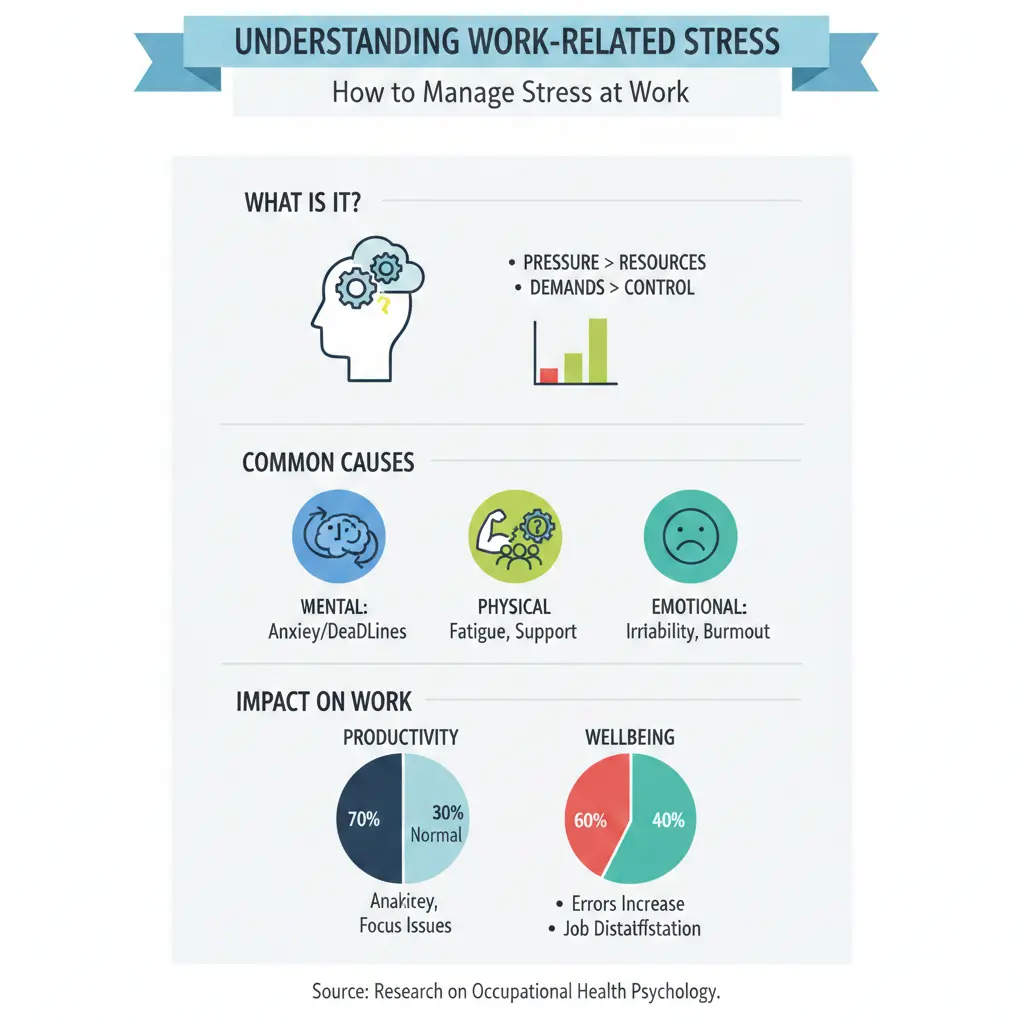
Work-related stress is a common problem that affects employees at all levels of an organization. It's caused by a range of factors, including heavy workloads, poor communication, and lack of control over work. When you're stressed at work, you may feel anxious, overwhelmed, and unable to cope with the demands of your job. This can lead to a range of negative effects, including decreased productivity, poor decision-making, and strained relationships with colleagues.
The effects of work-related stress can be serious and long-lasting. Chronic stress can lead to burnout, which is characterized by emotional exhaustion, cynicism, and reduced performance. Burnout can have serious consequences for your mental and physical health, including depression, anxiety, and cardiovascular disease. Furthermore, work-related stress can also affect your personal life, causing you to feel irritable, withdrawn, and disconnected from friends and family.
Managing work-related stress is essential for maintaining your overall health and well-being. By understanding the causes and effects of stress, you can take the first step towards developing effective coping strategies. This may involve identifying stress triggers, building a supportive work environment, and prioritizing self-care. With the right tools and knowledge, you can reduce your stress levels, improve your productivity, and achieve a better work-life balance.
Identifying Stress Triggers at Work
Identifying stress triggers at work is an important step in managing work-related stress. Common stress triggers include heavy workloads, poor communication, and lack of control over work. When you're given too much work to do, or when you're not given enough autonomy to make decisions, you may feel overwhelmed and stressed. Poor communication can also be a major stress trigger, particularly when you're not given clear instructions or when you're not kept informed about important developments.
Work-life balance is another important factor to consider when identifying stress triggers. When you're working long hours, or when you're expected to be available 24/7, you may feel like you're never able to switch off and relax. This can lead to burnout and exhaustion, particularly if you're not prioritizing self-care and taking time for yourself. By identifying your stress triggers, you can develop strategies to manage them, such as delegating tasks, setting boundaries, and prioritizing your well-being.
For example, let's say you're a marketing manager who's responsible for launching a new product. You may feel stressed because you're given a tight deadline, or because you're not given enough resources to do the job. By identifying the specific stress triggers, such as the deadline or the lack of resources, you can develop a plan to manage them. This may involve negotiating a later deadline, or seeking additional support from colleagues or managers.
Effective Stress Management Techniques
There are many effective stress management techniques that you can use to reduce your stress levels and improve your overall well-being. Mindfulness is one technique that involves paying attention to the present moment, without judgment or distraction. This can help you to focus on your work, reduce your stress levels, and improve your productivity. Exercise is another important stress management technique, as it can help to reduce anxiety and improve your mood.
Time management is also an essential stress management technique, as it can help you to prioritize your tasks, manage your workload, and reduce your stress levels. By using tools such as to-do lists, calendars, and prioritization techniques, you can stay organized, focused, and in control. Additionally, taking regular breaks, practicing self-care, and seeking support from colleagues and managers can also help to reduce stress and improve your overall well-being.
For instance, let's say you're a software developer who's working on a complex project. You may feel stressed because you're not sure how to solve a particular problem, or because you're working under a tight deadline. By using stress management techniques such as mindfulness, exercise, and time management, you can reduce your stress levels, improve your focus, and increase your productivity. This may involve taking a short walk during your break, practicing deep breathing exercises, or prioritizing your tasks to manage your workload.
Building a Supportive Work Environment
Building a supportive work environment is essential for managing work-related stress. This involves creating a culture of open communication, teamwork, and mutual support. When you feel supported by your colleagues and managers, you're more likely to feel confident, motivated, and able to manage your stress levels. Open communication is critical, as it allows you to share your concerns, ask for help, and receive feedback and support.
Team support is also essential, as it allows you to work collaboratively, share ideas, and learn from each other. When you're part of a supportive team, you're more likely to feel engaged, motivated, and committed to your work. Employee recognition is also important, as it acknowledges your contributions, rewards your achievements, and reinforces positive behaviors. By building a supportive work environment, you can reduce stress, improve morale, and increase productivity.
For example, let's say you're a customer service representative who's working in a call center. You may feel stressed because you're dealing with difficult customers, or because you're not sure how to resolve a particular issue. By having a supportive team and manager, you can receive guidance, feedback, and support to help you manage your stress levels and improve your performance. This may involve regular team meetings, coaching sessions, or recognition programs to motivate and reward employees.
Managing Stress as a Leader or Manager
As a leader or manager, you have a critical role to play in managing stress at work. This involves leading by example, prioritizing tasks, and encouraging self-care. When you model healthy behaviors, such as taking breaks, practicing self-care, and seeking support, you set the tone for your team and organization. By prioritizing tasks, you can help to manage workloads, reduce stress, and improve productivity.
Encouraging self-care is also essential, as it allows employees to take care of their physical and mental health. This may involve providing access to wellness programs, fitness classes, or mental health resources. By supporting employees' well-being, you can reduce stress, improve morale, and increase job satisfaction. Additionally, recognizing and rewarding employees' contributions can help to motivate and engage them, reducing stress and improving overall performance.
For instance, let's say you're a department manager who's responsible for a team of employees. You may feel stressed because you're managing a large workload, or because you're responsible for meeting tight deadlines. By prioritizing your tasks, delegating responsibilities, and encouraging self-care, you can reduce your stress levels, improve your focus, and increase your productivity. This may involve setting clear goals, providing regular feedback, and recognizing and rewarding employees' achievements.
Maintaining Work-Life Balance
Maintaining a healthy work-life balance is essential for managing work-related stress. This involves setting boundaries, prioritizing self-care, and avoiding burnout. When you're able to separate your work and personal life, you're more likely to feel rested, refreshed, and able to manage your stress levels. Setting boundaries is critical, as it allows you to establish clear limits between your work and personal life.
Prioritizing self-care is also essential, as it allows you to take care of your physical and mental health. This may involve activities such as exercise, meditation, or spending time with loved ones. By prioritizing self-care, you can reduce stress, improve your mood, and increase your overall well-being. Avoiding burnout is also important, as it can have serious consequences for your mental and physical health. By taking regular breaks, seeking support, and prioritizing your well-being, you can reduce your risk of burnout and maintain a healthy work-life balance.
For example, let's say you're a freelance writer who's working from home. You may feel stressed because you're working long hours, or because you're not sure how to separate your work and personal life. By setting boundaries, such as establishing a dedicated workspace or setting regular working hours, you can reduce your stress levels, improve your focus, and increase your productivity. This may involve creating a schedule, setting clear goals, and prioritizing self-care activities to maintain a healthy work-life balance.
Key Takeaways
In conclusion, managing work-related stress is essential for maintaining your overall health and well-being. By understanding the causes and effects of stress, identifying stress triggers, and developing effective coping strategies, you can reduce your stress levels, improve your productivity, and achieve a better work-life balance. Remember, managing stress is not just about reducing feelings of anxiety and overwhelm; it's also about improving your overall quality of life.
So, what's the first step you'll take to manage your stress at work? Will you start by identifying your stress triggers, building a supportive work environment, or prioritizing self-care? Whatever you choose, remember that managing stress is a journey, not a destination. By taking small steps each day, you can reduce your stress levels, improve your well-being, and achieve a healthier, happier you.
Frequently Asked Questions
What are the most common causes of work stress?
The most common causes of work stress include heavy workload, poor communication, and lack of work-life balance
How can I manage stress at work?
You can manage stress at work by prioritizing tasks, taking regular breaks, and practicing stress-reducing techniques such as mindfulness or deep breathing
Related Articles

Mindfulness and Meditation for Anxiety
Imagine being able to calm your racing thoughts, soothe your frazzled nerves, and find a sense of peace in the midst of chaos. For many of us, anxiety can be a constant companion, always lurking in the shadows, waiting to pounce. But what if you could learn to tame that anxiety, to quiet the voices...

Work-Life Balance Tips for Remote Workers
Are you tired of feeling like your work and personal life are constantly blurring together? As someone who's worked remotely for years, I think I can safely say that finding a healthy work-life balance is one of the biggest challenges remote workers face. You're probably reading this because you're...

How to Deal with Burnout
Have you ever felt completely exhausted, both physically and emotionally, like you're running on empty and can't seem to catch a break? You're not alone. I think we've all been there at some point or another, feeling like we're drowning in a sea of responsibilities and obligations. But what if I to...

How to Practice Mindfulness Daily
Are you tired of feeling stressed, anxious, and overwhelmed by the demands of your daily life? Do you struggle to focus, prioritize tasks, and maintain a sense of calm in the midst of chaos? You're not alone. Many people face these challenges, but there is a powerful tool that can help: mindfulnes...